Loading artist

Albert Namatjira
Year Of Birth
1902
Year Of Death
1959
Biography
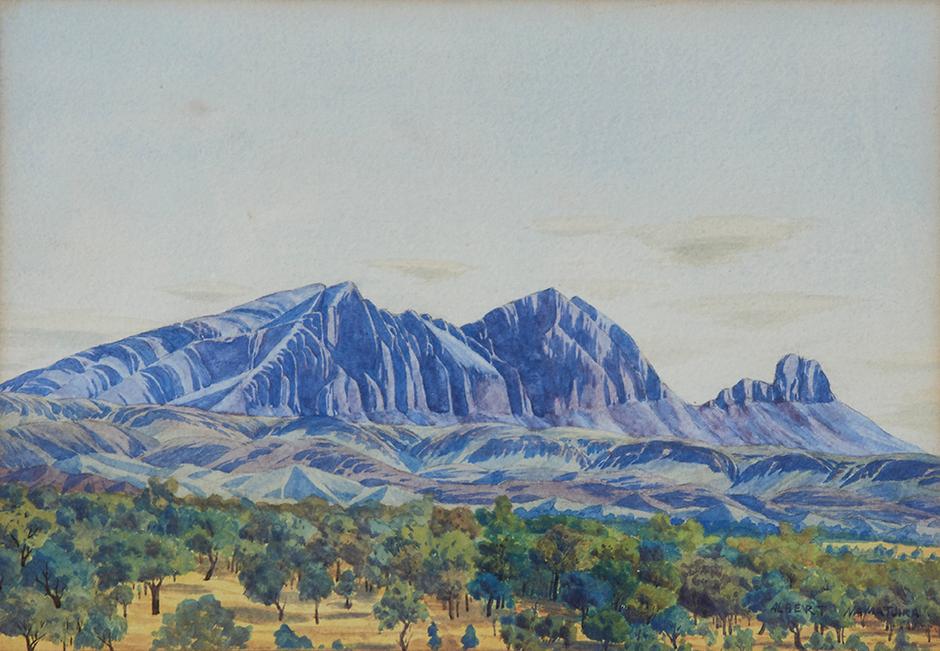
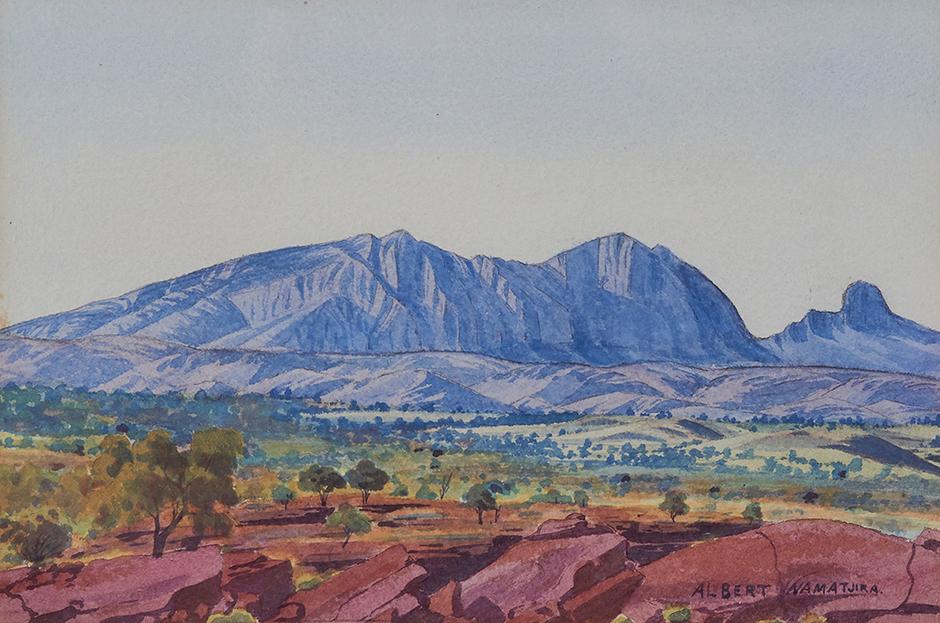
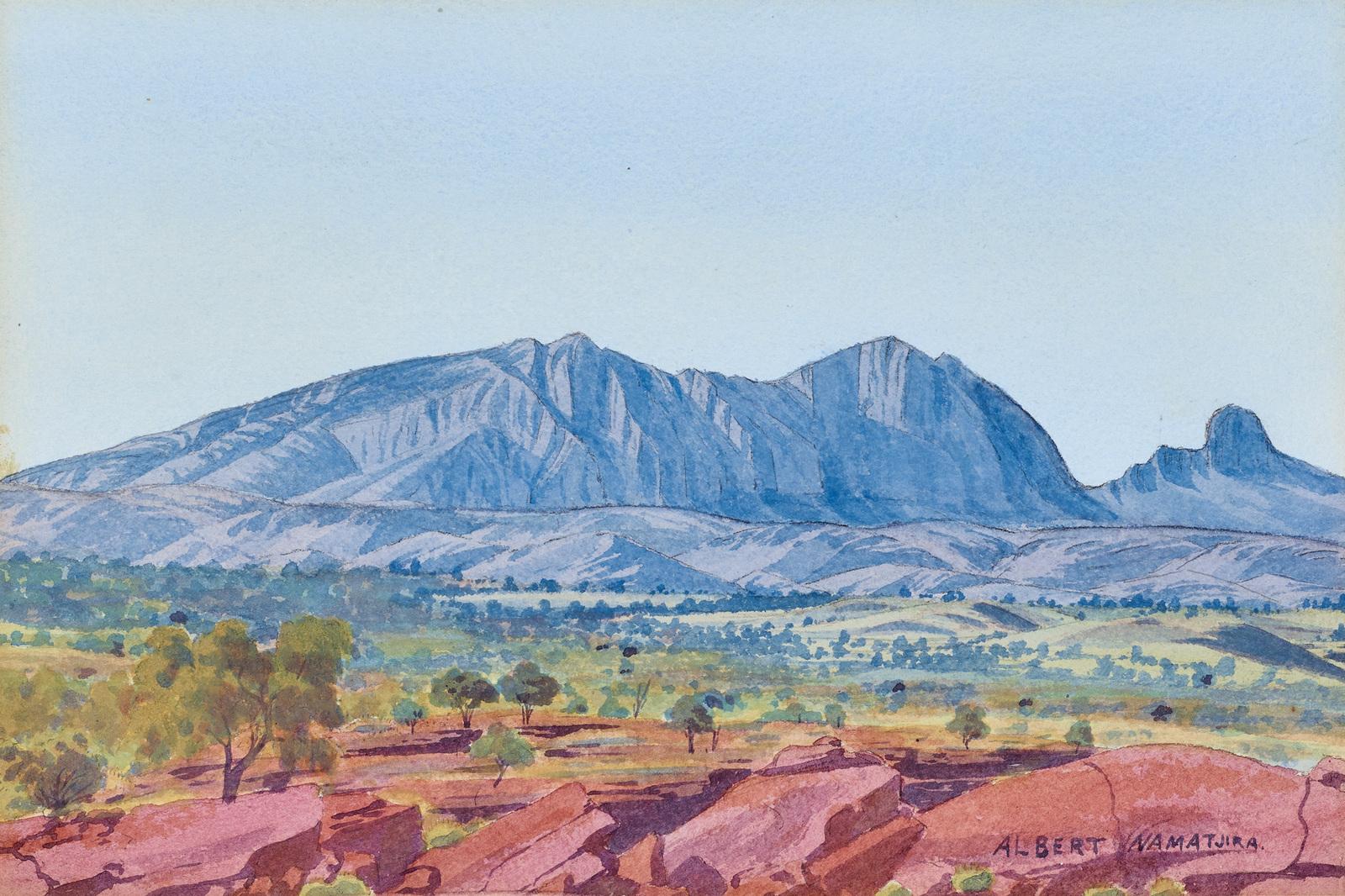
Albert Namatjira, a Western Arrernte artist from the Hermannsburg (Ntaria) region of Central Australia, is one of the most significant figures in Australian art history. Working in watercolour, he developed a luminous and highly distinctive interpretation of the central desert landscape, particularly the MacDonnell Ranges, ghost gums and river systems of his Country. While adopting the European watercolour tradition introduced through Hermannsburg Mission and his mentor Rex Battarbee, Namatjira transformed it into a profoundly personal visual language, in which topographical observation and deep cultural connection to Country are inseparable. As the National Gallery of Australia notes, his practice has been re-evaluated as expressing ancestral landscapes and a sustained relationship to Country rather than simply adopting Western pictorial conventions. Achieving national prominence in the 1930s and 1940s, Namatjira became the first widely recognised Aboriginal artist to exhibit and sell work within the Australian mainstream art world, and one of the earliest Indigenous artists to gain public acclaim on a national scale. His watercolours are now regarded as iconic images of the Australian interior, celebrated for their clarity, light and compositional balance, as well as their historical significance in reshaping the representation of Indigenous artistic achievement within modern Australian art. Today, his work is held in all major Australian public collections and continues to be recognised as foundational to both the Hermannsburg School and the broader narrative of Australian modernism.